Tufting has exploded in popularity as a creative outlet for making personalized rugs and unique home decor pieces. The craft’s accessibility has been further enhanced by the nail-free frame, which offers portability and a beginner-friendly setup that eliminates the intimidation of hammering nails or dealing with bulky wooden structures. These modern frames allow artists to start their projects quickly and work in smaller spaces, making tufting more approachable than ever before.
However, the convenience of a nail-free frame comes with its own set of challenges. Many beginners encounter frustrating issues like fabric slippage, uneven pile height, and difficulty maintaining consistent tension throughout their work. These problems can lead to wasted yarn, damaged backing fabric, and the discouragement that comes from watching your vision fall short of expectations. Without understanding the unique mechanics of nail-free systems, even enthusiastic crafters may abandon their projects halfway through.
This guide identifies the most common mistakes made when working with nail-free frames and provides practical, step-by-step solutions to overcome them. Whether you’re struggling with fabric tension, choosing the right materials, or mastering tufting gun technique, you’ll find actionable advice to transform your project from frustrating to fulfilling and create beautiful finished pieces you’ll be proud to display.
Understanding Your Nail-Free Frame and Essential Art Supplies
Nail-free frames revolutionize tufting through two primary mechanisms: gripper strips that clamp fabric edges with adjustable tension, or peg systems where fabric wraps around protruding posts. Unlike traditional wooden frames that require hammering nails into stretched fabric, these modern alternatives allow quick setup and fabric removal, making them ideal for apartment dwellers and those who need to store equipment between sessions. The trade-off is that maintaining consistent tension requires understanding how your specific frame’s gripping mechanism works with different fabric weights.
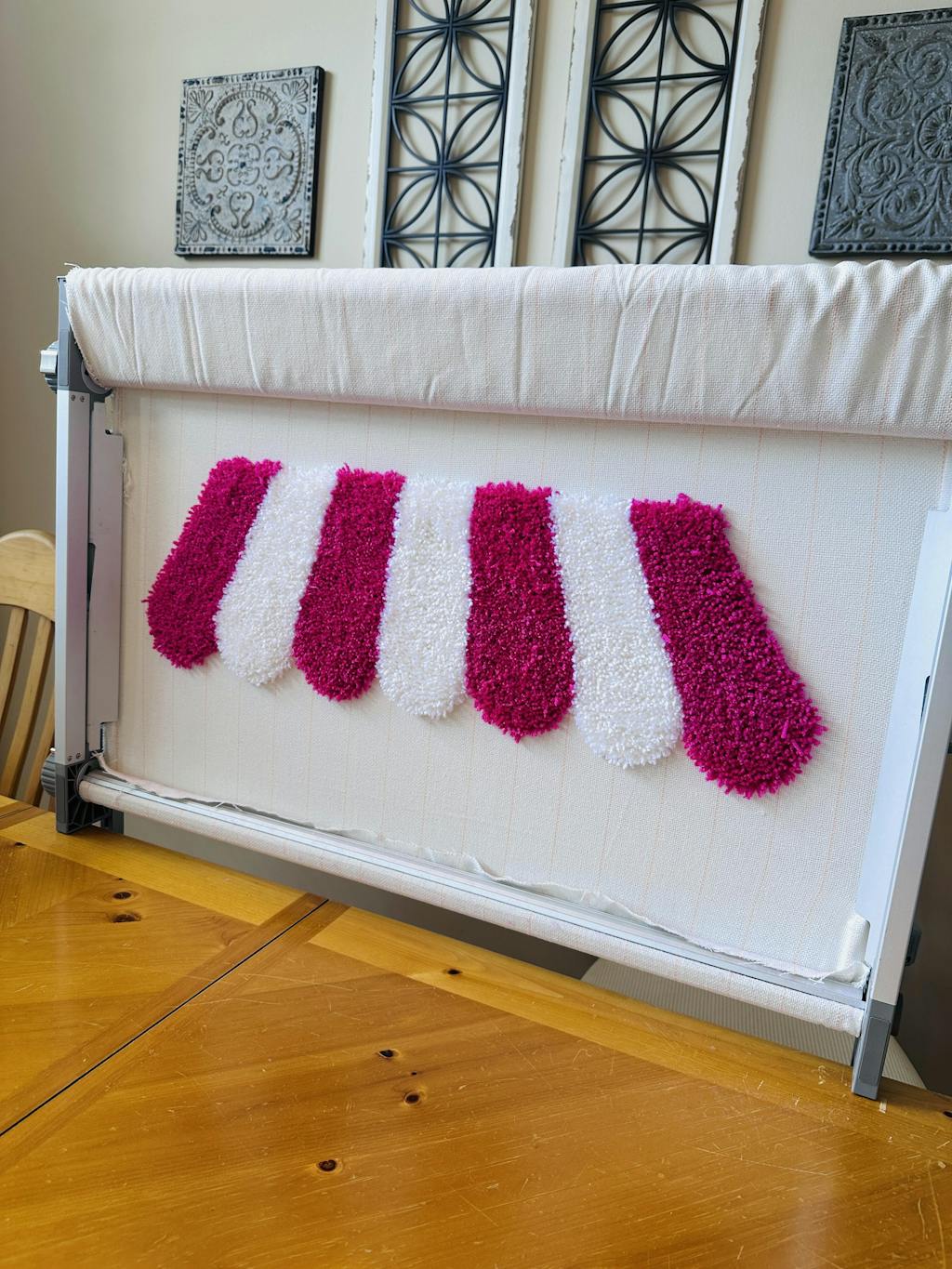
Beyond your frame and tufting gun, success depends on assembling the right toolkit. Primary backing fabric forms your canvas—this must be compatible with your frame’s grip system. You’ll need quality yarn appropriate for your gun type, sharp fabric scissors for clean trimming, a permanent marker for design transfer, and carpet adhesive to lock tufts in place. A backing material like monk’s cloth or felt gives your finished piece durability and a professional appearance. Investing in a spray bottle helps maintain fabric moisture for better grip, while a loop trimmer or scissors ensures even pile height. Starting with compatible, quality materials prevents the frustration of discovering mid-project that your fabric won’t hold tension or your yarn constantly breaks, saving both time and money while building your confidence as you develop your tufting skills.
Mistake #1: Improper Fabric Tension on Your Frame
Achieving drum-tight fabric tension is the foundation of successful tufting—without it, your entire project suffers. Loose fabric causes the tufting gun needle to push backing away rather than penetrating cleanly, resulting in skipped stitches that leave bare patches in your design. Uneven tension creates inconsistent pile heights across your rug, making some areas plush while others appear sparse and unprofessional. The gun becomes difficult to control when fabric gives too much, causing your hand to fatigue quickly and your lines to wander from your traced pattern.
To achieve perfect tension on a nail-free frame, start by securing one edge of your backing fabric in the gripper or around the pegs, pulling firmly before locking it in place. Move to the opposite side and stretch the fabric as taut as possible—it should resist when you press down with your palm—then secure that edge. Repeat this process for the remaining two sides, working in an alternating pattern to distribute tension evenly. For gripper systems, tighten adjustment knobs gradually in a star pattern rather than completing one side fully before moving to the next. Check tension by pressing the center of your fabric; it should barely move and produce a slight drumming sound when tapped. If fabric loosens during tufting, pause to re-tighten by releasing one side slightly, pulling tighter, and re-securing before the slack affects your work quality.
Mistake #2: Choosing the Wrong Backing Fabric
The backing fabric you select must work harmoniously with your nail-free frame’s gripping mechanism, as not all textiles hold equally well in gripper strips or around pegs. Monk’s cloth stands out as the ideal choice for most nail-free systems—its loose weave allows needles to penetrate easily while its sturdy construction maintains grip without tearing. The fabric’s natural texture provides enough friction for grippers to hold firmly even under the stress of repeated gun passes. Burlap offers a budget-friendly alternative with similar weave characteristics, though its coarser texture can be harder on your hands during setup.
Avoid tightly woven canvas or synthetic fabrics with slick finishes, as these materials slip from gripper teeth and create dangerous tension loss mid-project. Extremely thin fabrics tear under the clamping pressure, while overly thick upholstery materials may not fit properly into the gripper channel. Before committing to your main design, test your chosen fabric by securing a small piece in your frame and tufting a few sample rows. The fabric should remain locked in place without visible slippage at the edges, and your gun should glide smoothly without catching or creating puckers that indicate incompatibility between your backing and frame system.
Mistake #3: Incorrect Tufting Gun Technique and Speed
Maneuvering your tufting gun on a nail-free frame requires adjustments compared to traditional setups, as the smooth gripper surface and potential fabric flex demand more deliberate control. The gun can catch on loose fabric or skip across the surface if you move too quickly, creating irregular spacing between tufts. Pushing too hard causes the needle to penetrate at inconsistent depths, resulting in loops of varying heights that look uneven when trimmed. Conversely, moving too slowly allows yarn to build up excessively, creating dense patches that waste material and distort your design proportions.
Begin by holding your gun perpendicular to the fabric surface with a firm but relaxed grip, allowing the motor’s natural rhythm to guide your movement speed. For cut pile, maintain a steady pace of approximately one tuft per second as you trace your design lines, keeping consistent pressure against the backing. Loop pile requires slightly slower movement to ensure each loop forms completely before the needle retracts. Practice on a test section by tufting a simple shape—a square or circle—to find the speed where your gun glides smoothly without bouncing or catching. Listen for the consistent sound of clean penetration; any stuttering indicates you’re moving too fast or the fabric has loosened. Create a dedicated sampler piece with different speeds and pressures marked in sections, giving you a reference guide that shows exactly how technique variations affect your finished texture and appearance.
Selecting the Perfect Starter Tufting Kit for Beginners
When shopping for your first tufting kit, prioritize packages that include a stable nail-free frame with a reliable gripper or peg system—this foundation determines whether your early projects succeed or frustrate. Look for kits featuring an adjustable frame that accommodates various project sizes, allowing you to start small and expand as your confidence grows. The included tufting gun should operate smoothly with minimal vibration, as cheaper motors can jam frequently or struggle with yarn feed consistency. Brands like Clawlab offer tufting guns designed with beginners in mind, featuring consistent feed mechanisms that help reduce common frustrations during the learning phase. Quality starter kits bundle essential art supplies like primary backing fabric pre-cut to frame dimensions, a selection of yarn colors to experiment with different textures, sharp scissors designed for trimming pile, and carpet adhesive formulated specifically for securing tufts without soaking through backing material.

Beginner-friendly kits typically range from mid-tier options that balance affordability with durability—avoid the cheapest sets where frames warp easily and guns fail after a few hours of use, but don’t overspend on professional-grade equipment before you’ve confirmed your commitment to the craft. Read reviews specifically mentioning frame stability and gun reliability rather than focusing solely on the number of included accessories. A kit with fewer high-quality components serves you better than one packed with substandard tools that break during your first project. Consider packages that include instructional materials or access to online tutorials, as these educational resources help you avoid common pitfalls and maximize the value of your investment while building skills that translate to more ambitious creative home decor projects.
Step-by-Step Guide to Your First Nail-Free Frame Project
Phase 1: Project Setup & Design Transfer
Begin by stretching your primary backing fabric across the nail-free frame using the alternating tension method described earlier, ensuring every section is drum-tight before proceeding. Once secured, place your design template behind the fabric if working with translucent monk’s cloth, or tape a printed pattern to the front surface as a visual guide. Use a permanent marker to trace your design directly onto the backing, working from the center outward to prevent fabric shifting. For personalized rugs featuring text or intricate patterns, mark registration points at the corners to help you maintain orientation as you work. Double-check that your design fits comfortably within the tufting area, leaving at least two inches of border space around all edges for finishing.
Phase 2: The Tufting Process
Thread your tufting gun with your first yarn color, feeding it through the needle according to your gun’s specific instructions and testing on a scrap section to confirm proper loop formation. Start tufting from the outermost edges of each color block, working inward to prevent accidentally crossing into completed areas. Hold the gun perpendicular to the fabric and move at a steady, deliberate pace—approximately one tuft per second—following your traced lines precisely. When navigating curves, pivot the gun smoothly rather than lifting it completely, maintaining contact with the backing to ensure consistent pile height. Change yarn colors by cutting the current strand, leaving a two-inch tail on the back, then threading the new color and resuming immediately. Check the back of your work periodically to ensure tufts are penetrating fully and loops appear uniform.
Phase 3: Finishing Your Masterpiece
Once tufting is complete, remove the fabric from your frame and flip it to expose the back side where yarn tails and loops are visible. Apply carpet adhesive evenly across the entire tufted area using a foam brush or spreader, ensuring complete coverage without oversaturating—excess glue will seep through and stiffen your rug’s face. Allow the adhesive to dry according to manufacturer instructions, typically 24 hours for full cure. Cut a piece of backing fabric (felt or monk’s cloth) slightly smaller than your tufted area and press it firmly onto the dried adhesive, smoothing out any air bubbles. Trim excess primary backing fabric around your design, leaving a half-inch border, then fold this edge over the backing fabric and secure with additional adhesive for clean, professional edges. For cut pile creative home decor, use sharp scissors or an electric trimmer to shear loops to your desired height, working in small sections and checking frequently for evenness.
Transform Your Tufting Skills and Create Beautiful Projects
Mastering nail-free frame tufting comes down to avoiding three critical mistakes: maintaining drum-tight fabric tension throughout your project, selecting backing fabric that grips securely in your frame’s system, and developing consistent tufting gun technique at the right speed. Each of these elements builds upon the others—proper tension allows your chosen fabric to perform optimally, while both factors enable you to execute smooth, controlled gun movements that produce professional results. When you understand how these components work together, the nail-free frame transforms from a source of frustration into an efficient tool that makes creative home decor accessible in any living space.
Remember that every tuft that doesn’t penetrate cleanly and every section where fabric slips teaches you something valuable about your materials and technique. Beginner artists who invest in a quality tufting kit with a stable frame and reliable components set themselves up for success, but even the best equipment requires practice and patience. Start with simple designs to build confidence, create samplers to test different approaches, and don’t hesitate to re-tension fabric or adjust your speed mid-project when something feels off.
The moment you trim your finished piece and see your design come to life as a tangible, textured work of art makes every challenge worthwhile. Your handmade personalized rugs carry a uniqueness and character that mass-produced items simply cannot match, and the nail-free frame puts this rewarding creative journey within reach of anyone willing to learn from their mistakes and persist through the learning curve.