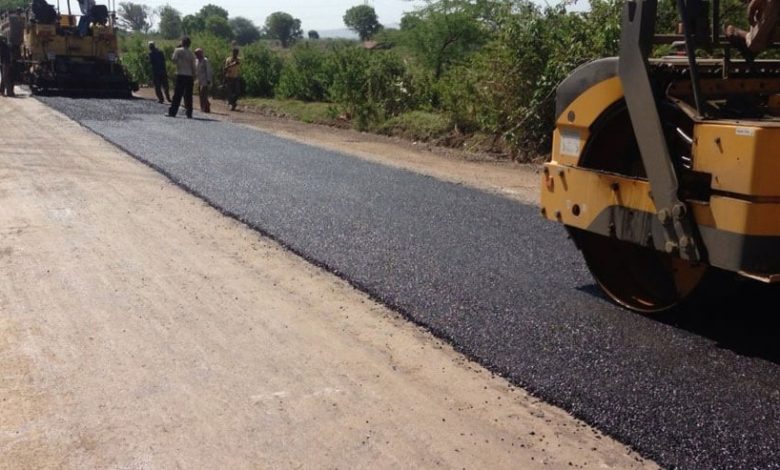
Good road quality is always a given. And the difference between a good road and a bad one is immediately visible and almost always comes down to compaction.
On any active road project, you’ll have a skid steer loader clearing and prepping areas between passes and a heavier plant handling primary earthworks. But the compaction phase is where the quality of the finished surface is actually determined. And the technology driving that phase has changed considerably.
The costs of poor compaction.
The consequences of getting compaction wrong aren’t just aesthetic. An under-compacted road surface has air voids in the asphalt layer, which allows water to seep in. In the UAE specifically, the issue is more about load-bearing capacity.
A surface that hasn’t been compacted to the right density will deform under the kind of heavy vehicle traffic that industrial and logistics roads take daily. Rutting will develop, leaving your surface uneven. You get a liability that’ll make a huge dent in your wallet.
The other cost is time. A road resurfacing project on an arterial route in Sharjah’s industrial area had to redo an entire section after surface defects appeared within six weeks of completion. The compaction passes had been done with old equipment that couldn’t maintain consistent amplitude across the full width of the lane.
That led to some parts of the road being under-compacted. And on a road with a heavy traffic load, that under-compaction shows up fast.
The repair work took longer than the original phase because the surface had to be milled back, and the whole process was redone. The project ran three weeks over schedule. One mistake caused a huge spike in both time and cost.
Compaction machines have become much more precise.
The biggest change in compaction machines is the precision with which that force is applied and the visibility the operator has into whether it’s working.
Older compaction equipment operated at fixed amplitude and frequency settings. The operator made a pass, and that was it. Whether the material had reached the required density was a question that got answered later. The feedback loop was slow, and the consequences of a bad pass weren’t always caught in time to do anything about it.
Modern compaction equipment has shortened that loop now. They use accelerometers to measure the stiffness response of the material in real time as the drum makes contact. When additional passes no longer increase density, the system flags it. The operator knows when the target has been reached and when it hasn’t.
Tandem rollers have improved surface quality.
Tandem rollers have a huge impact on the surface quality. On asphalt layers, the tandem roller is responsible for the smoothness and density of the surface that tires actually contact. Getting this pass wrong shows in the finished texture and how it holds up over time.
The newer models of tandem rollers have changed this. They’ve got amplitude control, which means the compactive force can be varied across a single pass based on what the material needs.
Thinner asphalt layers close to kerbs and edges need less force than the center of a lane. So, applying the same amplitude for everything means you either over-compact the edges or under-compact the center. Variable amplitude changes that.
They’ve also got oscillation mode. In traditional vibratory rollers, the drum used to apply force vertically. Oscillation applies force horizontally, in a circular motion, which is gentler on the material and better for compacting layers that are close to rigid structures like bridge decks or utility covers.
This capability matters on infrastructure-heavy projects in the UAE, where road surfaces regularly cross over or run alongside civil structures.
Double drum rollers and the finishing standard.
The finishing pass on a road surface is where the overall quality of the project becomes visible, and double drum rollers are directly responsible for that. With drums at both the front and rear of the machine, every point of the surface gets two contact passes in a single run. This means more consistent density across the full length of each pass and a smoother finished texture than a single-drum machine can achieve.
On high-specification road projects in the UAE, double drum rollers have become the standard finishing tool. The newer models combine the dual-drum advantage with the intelligent compaction systems described earlier. The finishing pass is also the final density check before the surface goes live.
That combination of surface quality and verified compaction in a single operation is where the technology has arrived, and it’s set a bar for road quality that older compaction approaches just couldn’t match.