The easiest way to misunderstand an AI video model is to judge it only by the first clip it produces. A strong first impression can be useful, but professional value usually appears somewhere else. It appears in control, consistency, and the ability to turn different kinds of creative input into outputs that can actually support work. In my testing, that is where Seedance 2.0 feels more serious than many tools that attract attention with spectacle alone. Its strength is not just that it can generate attractive motion. Its strength is that the model appears designed for structured creative use rather than one-off visual surprise.
That distinction matters because most professional teams are not searching for random inspiration. They are trying to reduce uncertainty. A marketer may need several motion directions for the same campaign visual. A design team may want to test how a still image behaves once it becomes a short sequence. A creator may need a draft that is not perfect, but coherent enough to evaluate. In those situations, the model is not being judged as entertainment. It is being judged as a working system.
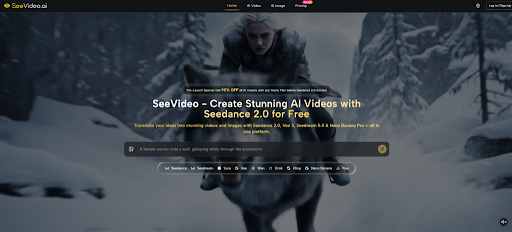
What makes this model more interesting is that its public framing already points in that direction. The platform emphasizes multi-scene generation, support for text, image, and audio inputs, and a workflow built around model selection and comparison. That combination suggests a more professional philosophy. Instead of pretending that one prompt should solve every creative problem, the product treats generation as a guided process with multiple forms of control.
Professional Quality Begins With Multimodal Control
One of the clearest signs of a more advanced model is how it accepts direction. Basic systems often rely too heavily on text alone. Text is powerful, but professional creative work rarely exists only as language. Ideas are often already partially visual or partially rhythmic before any generation starts.
That is why the model’s support for text, image, and audio matters. It expands the control surface. A user can begin from a descriptive idea, a finished visual reference, or an audio-led direction that influences pacing and emotional tone. In my observation, that makes the model feel less like a guessing engine and more like a responsive production tool.
Text Input Supports Conceptual Precision
Text remains important because it carries intent at the planning stage. It lets users define setting, mood, movement, and narrative emphasis before any asset exists. For early ideation, that matters a lot. A good text-led workflow allows a team to test concepts before time is spent on deeper production.
What matters professionally is not just that the model accepts text, but that text can function as one layer of direction rather than the entire burden of control.
Image Input Improves Visual Continuity
Image input is often where professional usefulness becomes easier to see. A still image already solves many difficult creative questions. It may define composition, color palette, subject placement, wardrobe, lighting, or product framing. Once that image becomes the starting point, the generation process becomes less abstract.
For commercial content, that is a meaningful advantage. Teams often already have approved visuals. They do not need to reinvent the whole concept. They need motion that grows from assets they already trust.
Audio Input Suggests Temporal Awareness
Audio support is another feature that makes the model feel more specialized. Video is not only about appearance. It is also about timing. Rhythm affects whether movement feels persuasive, natural, or emotionally aligned. A system that allows audio to participate in the process suggests a broader understanding of how video actually works.
That does not mean every output becomes perfectly choreographed. But it does suggest that the model is reaching toward a richer generation logic than a purely visual engine.
Professional Tools Usually Accept More Than One Kind Of Intent
When a model can receive direction through language, images, and sound, it becomes more compatible with real workflows. That is one of the quiet markers of professionalism. It respects how creative decisions are actually formed.
Multi Scene Generation Raises The Technical Ceiling
A model can look impressive in one isolated shot and still feel limited in practical use. Professional work often depends on sequence, not just image quality. Even short clips usually need progression, transition, or at least a sense of movement across ideas rather than within a single frozen concept.
That is why multi-scene generation matters. It raises the discussion from visual novelty to structural capability.
Sequence Design Is Harder Than Single Shot Design
One compelling frame is not the same as one compelling sequence. As soon as a model has to move across scenes, more technical demands appear. Continuity becomes more important. Pacing becomes more visible. Transition logic starts to affect how professional the output feels.
In my testing, this is one of the more convincing reasons to take the model seriously. A system that aims beyond single-shot beauty is operating closer to real video logic.
Continuity Shapes Credibility
When scenes relate well to one another, a clip feels more intentional. When they do not, even strong individual visuals can feel disconnected. This is especially noticeable in marketing, storytelling, and mood-based content, where sequence quality influences whether the viewer experiences the result as communication or as visual noise.
Professionalism in AI video often shows up here. It is not only about how one image moves. It is about whether a sequence keeps its internal logic.
Scene Based Output Supports Real Use Cases
A multi-scene capable model is better suited to concept films, social storytelling, ad experiments, and visual prototyping. These are not always large productions, but they still depend on more than one moment. A model that can handle this kind of progression has a much wider practical range.
Sequence Capability Changes The Nature Of The Tool
Once a system becomes more credible across scenes, it stops being just a novelty generator. It starts becoming a tool for building short narrative units. That is a major shift in professional relevance.
Motion Quality Is A Professional Standard
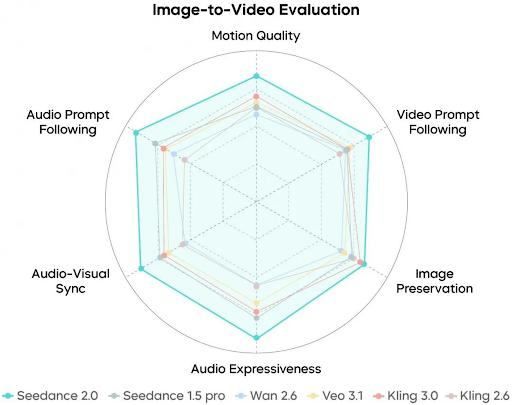
A lot of casual evaluation focuses on aesthetics. Professionals usually care more about whether motion holds up under attention. A frame can be beautiful and still fail once movement begins. This is where many AI outputs lose credibility.
In my observation, the model’s appeal comes partly from the way motion is framed as a core quality rather than an afterthought. That is an important professional signal.
Stable Motion Supports Usable Output
When motion is unstable, the viewer notices the tool before the message. That is rarely what a professional user wants. A strong generation system should allow movement to support the scene instead of distracting from it.
For product communication, brand storytelling, or short social ads, this is especially important. The clip does not need to be perfect cinema. It needs to remain watchable, persuasive, and coherent.
Natural Movement Helps Protect The Original Idea
If a reference image or prompt already carries a strong concept, poor motion can distort it. Better motion behavior protects the value of the original creative direction. That matters because professional workflows often begin from something already approved or strategically chosen.
Good Motion Makes Iteration More Worthwhile
A model becomes more useful when its outputs are good enough to compare meaningfully. If motion quality collapses too often, iteration becomes wasteful. If motion remains usable, iteration becomes part of a rational workflow. That is a more professional condition.
The Goal Is Repeatability, Not Just Occasional Brilliance
Professional users usually value repeatable adequacy over rare excellence. A system that can repeatedly produce usable motion may be more valuable than one that occasionally produces something spectacular but unreliable.
Model Selection Adds Another Layer Of Professional Use
Another reason the platform feels more mature is that it does not hide model choice. Seedance 2.0 is presented as the central engine, but users are also encouraged to think about which model best suits the job. That is a small but meaningful detail.
Choice Encourages Creative Judgment
Professional work often depends on choosing the right tool for the right task. A platform that acknowledges this encourages better habits. Instead of assuming one engine should handle everything, the user learns to think in terms of fit, tradeoffs, and output purpose.
Comparison Reduces Blind Trust
The workflow is stronger because generation leads naturally into comparison. That matters because AI output should usually be evaluated, not blindly accepted. When multiple model results can be compared inside one environment, decision-making becomes more informed.
A Shared Workspace Lowers Friction
There is also a practical benefit here. Comparison inside one workspace is easier than recreating the same idea across disconnected tools. That reduces switching cost and makes professional experimentation more efficient.
Professional Systems Help Users Choose Better
A serious tool does not only generate. It helps users evaluate. That is one reason the model feels more than just visually impressive. It sits inside a process that supports judgment.
The Official Workflow Stays Clear And Workable
Even with its more advanced positioning, the visible workflow remains short. That simplicity is not a weakness. In many cases, it is part of the professionalism.
Step One Define The Starting Input
The process begins by choosing whether the video starts from text or image. This creates a clear entry path and keeps the first decision practical.
Step Two Select The Most Suitable Model
The user then chooses the model that best fits the project goal. Seedance 2.0 is central, but the system also leaves room for other strengths depending on the task.
Step Three Generate Compare And Evaluate
After that, the workflow becomes generation plus comparison. In professional use, this is usually the right way to think. The goal is not to worship the first result. The goal is to judge which result is most useful.
A Practical Reading Of Model Professionalism
| Professional Area | What The Model Appears To Offer | Why It Matters In Practice |
| Input structure | Text, image, and audio guided creation | Allows more precise and realistic starting points |
| Sequence capability | Multi-scene generation emphasis | Supports narrative flow and stronger concept testing |
| Motion behavior | Focus on natural and coherent movement | Improves usability in real content environments |
| Evaluation workflow | Generation paired with comparison | Encourages informed selection instead of guesswork |
| Team compatibility | Works with briefs, visuals, and creative assets | Fits more naturally into mixed professional workflows |
| Operational value | Fast path from idea to candidate output | Helps teams iterate under time pressure |
The Limits Still Deserve Respect
A professional reading should also stay honest about constraints.
Clear Direction Still Improves Results
Even a capable model depends on the quality of the user’s direction. Better prompts, better references, and better intent usually lead to better outcomes.
Iteration Remains Part Of Serious Use
In my testing, strong outputs often come after comparison and adjustment rather than from the first attempt alone. That is normal for generative work.
The Model Does Not Replace Creative Judgment
Seedance 2.0 AI Video can accelerate drafting and comparison, but it does not remove the need for taste, editing sense, or strategic choice. Professionalism still comes partly from the user.
The Most Credible View Is A Balanced One
The model feels professional not because it eliminates all effort, but because it makes effort more productive. That is a more believable and more useful kind of strength.
Professionalism Here Comes From Structured Capability
What gives Seedance 2.0 professional weight is not one isolated feature. It is the combination of multimodal input, multi-scene thinking, motion credibility, and a workflow that supports selection rather than blind faith. Those qualities suggest a model built for more than visual surprise.
In my observation, that is the right way to understand its value. It is not simply a tool for generating striking clips. It is a system that helps users move from idea to evaluation with more structure, more control, and a better chance of producing something genuinely usable. For professional video work, that is often the standard that matters most.