Artificial Intelligence and Mechanical Engineering: Transforming Design Manufacturing, and Careers

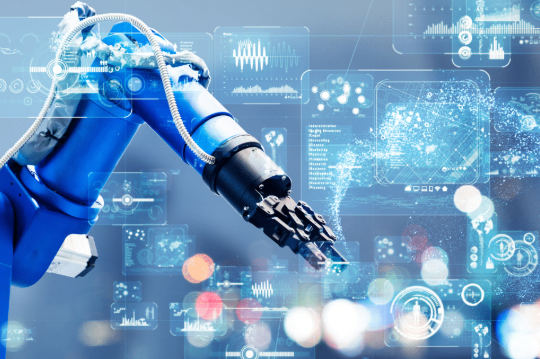
Mechanical engineering is undergoing an unprecedented transformation under the powerful wave of AI technology. This note analyzes the opportunities and challenges AI brings to mechanical engineers from multiple dimensions.
Efficiency Improvement
In the past, mechanical engineers had to expend tremendous effort on design work such as repeated calculations and manual drafting, which could be exhausting. But with AI, the entire workflow has changed.
Intelligent Generation of Design Solutions
AI algorithms act like highly efficient data processors, capable of rapidly analyzing massive design datasets. By learning from past successful cases through machine learning, they can precisely extract key features and design patterns, providing extremely valuable references for new designs. Moreover, based on the requirements and constraints set by engineers, AI can generate a wide variety of design solutions in a short time, covering novel ideas and innovative points. This helps engineers broaden their thinking and break through traditional limitations.
For example, when designing a new type of engine, AI can quickly propose multiple designs with different structures and parameter combinations, giving engineers more inspiration.
Parametric Design
Parametric design is a game-changing application of AI in mechanical design. Engineers only need to input key design parameters—such as dimensions, material properties, load conditions, etc.—and the AI system can automatically generate 3D models while allowing easy modifications and optimizations. This greatly reduces manual drafting workload, makes solution comparison and evaluation extremely simple, and quickly helps engineers find the optimal solution.
Imagine adjusting just a few parameters during the design of a mechanical part—the model changes instantly, and efficiency skyrockets!
Immersive Design Experience
When AI combines forces with VR and AR technologies, mechanical design enters an immersive new era. Engineers wearing VR or AR devices can interact with design models in real time within virtual space. They can experience the actual usage effects of the product in advance, identify and solve issues early. This not only improves design accuracy but also sparks boundless creativity, making designs more innovative.
Major Optimization of Manufacturing Processes
In the field of mechanical manufacturing, AI has also triggered a revolutionary storm.
Real-Time Monitoring and Intelligent Early Warning
During production, AI systems continuously monitor key information such as equipment operation status, processing parameters, and product quality. If any anomaly occurs—such as equipment failure or machining accuracy deviation—it immediately issues an alert and quickly identifies the root cause through data analysis, providing solutions.
For instance, AI automatically adjusts cutting parameters based on tool wear data in rapid prototyping, ensuring machining accuracy and surface quality while extending tool life—truly intelligent!
Process Optimization and Resource Scheduling
By deeply mining production data, AI identifies bottlenecks and optimization opportunities in manufacturing processes, providing a scientific basis for engineers to develop production plans and process flows. At the same time, it enables intelligent scheduling of production resources, rationally allocating manpower, materials, and time to improve efficiency and reduce costs.
For example, in an automotive manufacturing plant, AI can optimize parts delivery routes, making the production line run more smoothly and reducing waiting time.
Efficient Quality Inspection
Traditional quality inspection relies on manual labor or simple equipment, which is low-efficiency and error-prone. AI-based quality inspection technologies—such as machine vision and deep learning algorithms—can quickly and accurately identify product defects and dimensional deviations, enabling full-process quality monitoring and traceability.
In electronics manufacturing, combining machine vision with deep learning allows rapid detection of tiny welding defects in electronic components, greatly improving product quality and production efficiency.
Upgraded Fault Diagnosis and Predictive Maintenance
Mechanical equipment inevitably develops faults after long operation. AI makes fault diagnosis and maintenance much smarter.
Intelligent Fault Diagnosis
AI collects data such as vibration, temperature, pressure, and current during equipment operation to build fault diagnosis models. By learning from large amounts of historical fault data through machine learning, it can accurately identify equipment abnormalities and predict faults in advance.
For example, analyzing motor operation data can determine whether there are issues like bearing wear or rotor imbalance, enabling timely warnings to prevent sudden equipment failures from disrupting production.
Predictive Maintenance
AI-based predictive maintenance systems formulate reasonable maintenance plans based on equipment operating status and fault predictions. This avoids production losses from equipment breakdowns while optimizing maintenance resource allocation and reducing costs.
In the petrochemical industry, AI predicts faults in large equipment, allowing advance scheduling of maintenance to ensure production continuity and safety.
Challenges Brought by AI
While AI brings opportunities, it also presents challenges for mechanical engineers.
Some Positions Being Replaced
As AI penetrates deeper into mechanical engineering, some repetitive and highly rule-based jobs are impacted. Simple part design, standard component selection, basic machining operations, and quality inspection tasks can be easily handled by AI and automated equipment, putting pressure on entry-level mechanical engineering positions and even risking unemployment.
Changing Skill Requirements
In the AI era, mechanical engineers can no longer rely solely on mechanical principles, design, and manufacturing processes—they must also master computer programming, data analysis, machine learning, and more. Learning new skills requires significant time and effort, creating considerable pressure for working engineers. Moreover, AI technology evolves rapidly, requiring continuous learning to keep up—a huge challenge for busy professionals. At the same time, university and training programs sometimes fail to keep pace with market demands, affecting career development.
Data Security and Privacy Governance
AI relies on massive amounts of data, and mechanical engineers collect data on equipment operation, product design, and user information. This data often contains corporate secrets and user privacy; leaks or misuse can have severe consequences.
For example, theft of production data from smart manufacturing companies threatens technological advantages and market competitiveness; privacy leaks from smart devices infringe on user rights. Additionally, AI systems themselves may have security vulnerabilities, making them susceptible to hacker attacks that cause data breaches or system paralysis.
New Directions for Career Development
Faced with these challenges, mechanical engineers also have new career paths.
Interdisciplinary Compound Talent
Interdisciplinary compound talent is the future trend. These professionals understand both mechanical engineering and fields like computer science, data analysis, and AI, enabling them to work in cross-disciplinary environments. They can perfectly integrate AI technology with mechanical engineering across the full product lifecycle of design, manufacturing, and maintenance.
For example, in intelligent robot development, interdisciplinary talent can fully leverage multi-domain knowledge advantages. To become such talent, mechanical engineers must continuously learn—through training, online courses, or advanced degrees—and actively participate in cross-disciplinary projects to gain experience.
Innovative Design
With basic repetitive work being replaced by AI, innovative design and high-end R&D become the core competitiveness of mechanical engineers. In the AI era, engineers should focus on these areas, leveraging creativity and expertise to develop high-value, competitive products.
In innovative design, use AI-provided data and computing power, deeply research market and user needs, and combine advanced design concepts to create unique products. In high-end R&D, focus on industry frontiers, participate in new technology, new materials, and new process development, and shine in high-end fields like new energy vehicles and aerospace.
Integration of AI and Mechanical Engineering
Mechanical engineers can dive into R&D on the fusion of AI and mechanical engineering, exploring better applications and developing proprietary technologies and products. They can also play a role in technology application and promotion—helping companies solve implementation challenges and driving AI adoption in the industry. For example, providing AI technology consulting, training, and assisting in developing application strategies for enterprises.
Coping Strategies
To stand firm in the AI era, CNC mechanists must master these strategies:
Continuous Learning
Adopt a lifelong learning mindset, stay updated on industry trends, actively learn AI knowledge, enhance interdisciplinary abilities, and cultivate innovation and practical skills. Participate in training, seminars, online learning, and research projects to keep enriching yourself.
Innovation and Collaboration Skills
Break free from traditional thinking, cultivate innovative mindsets, approach problems from different angles, and boldly try new methods. At the same time, improve cross-disciplinary collaboration skills such as communicating and cooperating effectively with professionals from other fields through innovation competitions, academic exchanges, and interdisciplinary projects.
Keep Pace with Industry Trends and Regulations
Closely follow trends in mechanical engineering, market demands, and changes in policies and regulations. Stay informed about the latest technologies, products, and services to seize development opportunities, ensure work complies with regulations, and achieve mutual growth with the industry.
In summary, AI brings both opportunities and challenges to mechanical engineers. As long as we actively respond, continuously learn and improve, we can embark on a new career chapter in mechanical engineering in this era full of change.


