Robot Vacuums, Sensors, and AI: Why Clean Homes Are Still Not Fully Automated
Robot Vacuums, Sensors, and AI: Why Clean Homes Are Still Not Fully Automated

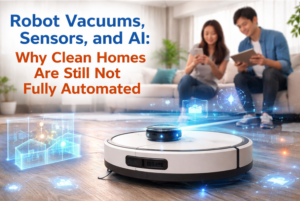
Smart home technology has advanced quickly over the past decade. Lighting systems respond to voice commands, thermostats learn daily routines, and security cameras can detect motion with impressive accuracy. Cleaning technology has followed the same trend, especially with robot vacuums, smart sensors, and AI-powered navigation systems. Despite these innovations, fully automated home cleaning remains out of reach for most households.
Many homeowners expect robot vacuums and smart cleaning devices to deliver consistently clean homes with minimal effort. In reality, these technologies still face physical, environmental, and practical limitations that prevent complete automation. Understanding where cleaning technology succeeds and where it falls short helps homeowners make better decisions about maintaining hygiene, especially when preparing homes for occupancy.
How Robot Vacuums Have Changed Home Cleaning
Robot vacuums were once seen as novelty gadgets. Early models moved randomly, bumped into furniture, and cleaned unevenly. Modern versions are far more advanced. Today’s robot vacuums use sensors, cameras, and mapping software to navigate rooms efficiently.
Most premium models can map entire homes, identify obstacles, return to charging docks, and even resume cleaning where they left off. Some are connected to mobile apps that allow users to schedule cleanings, set no-go zones, and monitor progress remotely. These improvements have made robot vacuums useful for daily dust control and surface maintenance.
However, even the most advanced robot vacuum is still designed for routine floor-level cleaning, not comprehensive home hygiene.
The Role of Sensors in Smart Cleaning Devices
Sensors play a critical role in modern cleaning technology. Infrared sensors help avoid stairs, bump sensors detect furniture, and optical sensors assist with navigation. Some devices even use LiDAR to create accurate floor maps.
While these sensors improve efficiency, they operate within narrow parameters. Sensors are excellent at identifying solid obstacles but struggle with soft objects like cables, curtains, or thin rugs. They also cannot detect invisible issues such as grease build-up, bacteria, or allergens embedded in fabrics.
Because sensors rely on physical detection, they cannot evaluate cleanliness in the way humans can. A floor may appear clean to a robot, but still contain fine dust, food residue, or moisture that contributes to hygiene issues.
AI Navigation vs Real-World Home Conditions
Artificial intelligence allows robot vacuums to learn room layouts and adjust movement patterns over time. Some systems recognize high-traffic areas and clean them more frequently. Others adapt suction power based on surface type.
Despite this intelligence, AI cleaning systems are limited by real-world variability. Homes are not static environments. Furniture is moved, items are left on the floor, and layouts change frequently. AI models must constantly relearn spaces, which reduces efficiency.
AI also cannot interpret context the way humans do. It does not understand that spilled food needs immediate attention, that bathroom areas require deeper sanitisation, or that renovation dust behaves differently from everyday dirt.
Why Floors Are Only Part of the Problem
Most automated cleaning devices focus almost entirely on floors. This makes sense from a design perspective, but floors are only one component of home cleanliness.
Dust accumulates on shelves, window tracks, ceiling fans, and air vents. Grease builds up on kitchen surfaces. Moisture lingers in bathrooms. None of these areas are addressed by robot vacuums or smart mops.
Even advanced models with mopping functions cannot scrub grout, remove soap scum, or disinfect high-touch surfaces. As a result, homes may look clean at a glance while still harbouring hygiene issues.
The Challenge of Deep Cleaning and Hygiene
True cleanliness involves more than removing visible dirt. Hygiene requires addressing bacteria, allergens, and residue that technology cannot detect or eliminate on its own.
Smart devices do not evaluate sanitation levels. They cannot assess whether a surface is safe for children, elderly residents, or allergy-sensitive individuals. They also cannot make judgement calls about cleaning intensity based on usage patterns or household needs.
This limitation becomes especially clear during events like moving into a new home, completing renovations, or preparing a property for occupancy.
Automation and the Problem of Human Preparation
Smart cleaning systems depend heavily on human preparation. Floors must be cleared, obstacles removed, and spaces maintained for optimal performance. Without this preparation, automation fails.
In many homes, daily life makes this preparation unrealistic. Shoes are left by doors, toys are scattered, cables cross floors, and furniture shifts. Automation works best in controlled environments, not lived-in homes.
Because of this, smart cleaning devices are most effective as maintenance tools rather than complete solutions.
Smart Homes Still Rely on Human Intervention
Even in highly automated homes, human involvement remains essential. Homeowners must empty dust bins, clean brushes, replace filters, and maintain devices. Sensors and AI do not eliminate these tasks.
More importantly, automation cannot replace human judgement. Only people can decide when deeper cleaning is required, when hygiene standards need to be raised, or when a space must be prepared for a specific purpose.
This is why many smart home users combine technology with professional support when higher standards are required.
Why Technology Falls Short During Move-In Preparation
Preparing a home for move-in is one of the clearest examples of automation limits. Even if a robot vacuum has cleaned the floors daily, a new occupant expects more.
Move-in preparation involves removing renovation dust, wiping cabinets, sanitising bathrooms, cleaning window tracks, and ensuring surfaces are safe for daily use. These tasks require manual effort and attention to detail that technology cannot provide.
For this reason, homeowners often turn to reliable house cleaners in Singapore when technology alone is insufficient. Professional cleaners address areas beyond the reach of smart devices and ensure homes meet real hygiene expectations.
Automation vs Accountability
Another limitation of automated cleaning is accountability. When a robot vacuum misses a spot, there is no way to request correction. The device simply follows its programming.
Human cleaners, on the other hand, can respond to feedback, re-clean missed areas, and adapt to specific requirements. This level of accountability is critical when cleanliness affects comfort, health, or property inspections.
Automation offers convenience, but accountability still requires human involvement.
The Illusion of Fully Automated Living
Marketing often suggests that smart homes are self-managing environments. In reality, automation reduces workload but does not eliminate responsibility.
Cleaning technology is designed to assist, not replace, human effort. It keeps dust levels manageable but does not ensure complete cleanliness. This distinction is important for homeowners who rely too heavily on devices and overlook deeper hygiene needs.
Understanding this gap prevents disappointment and encourages realistic expectations.
Technology Works Best With Hybrid Cleaning Approaches
The most effective home maintenance strategies combine technology with human support. Robot vacuums handle daily dust, while humans manage deep cleaning and sanitation.
This hybrid approach balances convenience with cleanliness. Technology reduces repetitive work, while people address tasks requiring judgement, flexibility, and attention to detail.
For move-in situations, this balance becomes even more important. Technology can maintain floors, but professional services ensure readiness. Many homeowners therefore schedule move in cleaning service after relying on automation for daily upkeep.
Sensor Limitations in Kitchens and Bathrooms
Kitchens and bathrooms present challenges that automation cannot solve. Grease, moisture, and bacteria require targeted cleaning methods. Sensors cannot detect microbial build-up or slippery residues.
Robot vacuums also avoid wet areas, leaving bathrooms largely untouched. Smart mops may glide over tiles but cannot scrub grout or disinfect fixtures.
These areas remain manual-cleaning zones in every smart home.
Why AI Cannot Replace Human Standards
AI operates based on patterns and predefined rules. It does not understand personal standards of cleanliness. What one household considers clean may not meet another’s expectations.
Humans adjust cleaning based on lifestyle, family size, pets, allergies, and health concerns. AI systems cannot customise cleaning in this way.
As long as cleanliness remains subjective and contextual, automation will remain limited.
Maintenance Costs and Long-Term Reliability
Smart cleaning devices require ongoing maintenance. Filters clog, brushes wear out, and sensors need cleaning. Over time, performance declines without proper care.
This maintenance often surprises homeowners who expected automation to reduce effort entirely. In practice, automation shifts effort rather than eliminating it.
Professional cleaning, while manual, delivers consistent results without relying on device performance or technical upkeep.
Smart Cleaning and Future Developments
Cleaning technology will continue to improve. Better sensors, stronger AI models, and integrated home systems may reduce some limitations. However, physical constraints will remain.
Robots will still struggle with clutter, hygiene assessment, and contextual decision-making. Homes will remain dynamic environments shaped by human behaviour.
Technology may evolve, but complete automation of cleanliness remains unlikely in the near future.
Realistic Expectations for Smart Home Owners
Homeowners benefit most when they view automation as assistance rather than replacement. Robot vacuums maintain cleanliness between deeper sessions. Sensors help manage routines. AI improves efficiency.
But clean homes still depend on human judgement, manual effort, and professional expertise when standards must be met.
Recognising this reality leads to better outcomes and fewer frustrations.
Why Clean Homes Are Still a Human Responsibility
Technology supports cleanliness, but responsibility remains human. Decisions about hygiene, comfort, and readiness cannot be automated fully.
Smart devices are tools, not solutions. They reduce workload but do not remove the need for hands-on care.
Until technology can assess hygiene, adapt to human standards, and clean every surface safely, clean homes will remain a shared effort between automation and people.