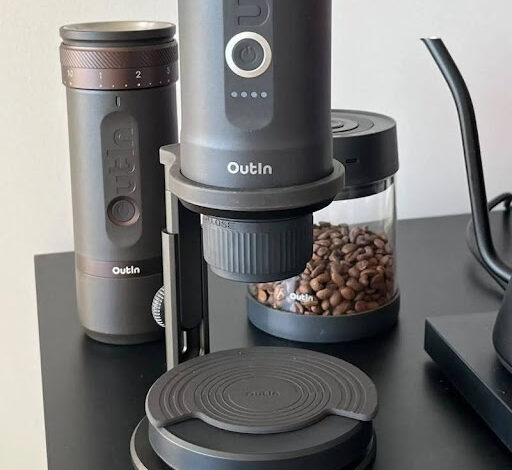
For coffee enthusiasts who refuse to compromise on quality while traveling, finding the right travel coffee grinder presents a unique challenge. Whether you’re backpacking through Europe, on a business trip across continents, or camping in remote locations, the ability to enjoy freshly ground coffee can transform your travel experience. However, the perfect travel grinder must balance multiple competing demands that don’t apply to home equipment.
The ideal travel coffee grinder needs to be compact enough to fit in your luggage without taking up precious space, yet robust enough to withstand the rigors of constant movement. It must comply with airline security regulations, particularly regarding battery capacity and sharp components. Weight becomes critical when you’re already managing baggage limits, while grinding efficiency matters when you’re preparing coffee in hotel rooms or campsites with limited time and resources. Modern travelers also need quick charging options compatible with various power outlets worldwide, or reliable manual alternatives that work anywhere without electricity. This guide helps you navigate these requirements to find a grinder that truly enhances your coffee ritual on the road.
Key Features to Consider
Portability stands as the most crucial factor when selecting a travel coffee grinder. The device should weigh less than one pound and measure no more than eight inches in height to fit comfortably in carry-on luggage or backpacks. Consider grinders with cylindrical designs that nestle easily into side pockets or water bottle holders. Some models feature collapsible handles or detachable components that reduce their footprint further, making them ideal for minimalist packers who need every inch of space.
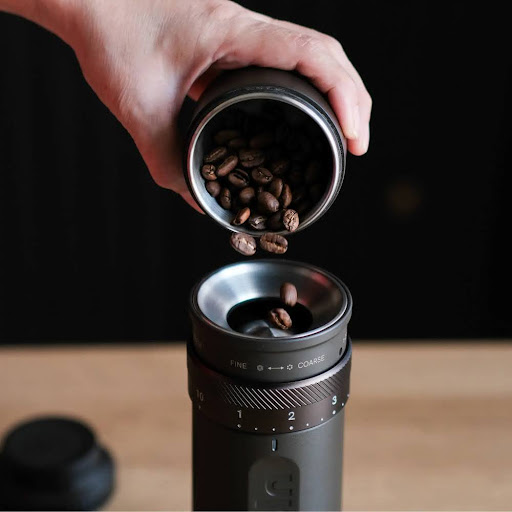
Grinding efficiency directly impacts your travel experience, especially during rushed mornings in hotel rooms or early camping departures. Look for burr mechanisms rather than blade systems, as they produce consistent particle sizes essential for quality brewing. The grind adjustment range matters too—a versatile grinder should handle everything from coarse French press grounds to fine espresso powder. Manual grinders typically require 60 to 90 seconds of continuous cranking for a single serving, while electric models complete the task in 20 seconds or less. Consider your typical travel scenarios and energy levels when weighing this trade-off.
Durability becomes non-negotiable when your grinder faces constant jostling in luggage, temperature fluctuations, and occasional drops on hard surfaces. Reinforced construction with impact-resistant materials protects internal mechanisms from travel stress. Check for sealed bearing systems that prevent coffee oils and dust from degrading performance over time. Battery capacity matters for electric models—aim for units offering at least 15 grinding sessions per charge, with USB-C charging that works with your existing travel adapters. Manual grinders eliminate battery concerns entirely but require robust crank mechanisms with metal gears that won’t strip under pressure.
Best Materials for a Travel Coffee Grinder
Stainless steel construction offers exceptional durability that withstands the punishment of frequent travel. Grinders built with stainless steel burrs and housing resist corrosion from moisture exposure and maintain structural integrity through countless trips. The material’s weight becomes the primary drawback—steel grinders typically add 12 to 16 ounces to your luggage, which matters when approaching airline weight limits. However, this heft translates to stability during grinding, preventing the device from sliding across hotel countertops. Steel also provides superior heat dissipation, preventing burr overheating that can affect grind quality during extended use.
Plastic components significantly reduce weight, with some grinders weighing as little as 6 ounces thanks to high-grade polycarbonate construction. Modern travel grinders use BPA-free plastics that resist cracking under pressure and temperature changes encountered during flights and road trips. The material allows for innovative designs with transparent hoppers that let you monitor bean levels and grinding progress. Quality plastic grinders incorporate reinforced stress points around crank attachments and burr housings to prevent failures. The main limitation involves longevity—plastic threads can wear over time with repeated assembly and disassembly, though premium models address this with metal inserts at critical junctions.
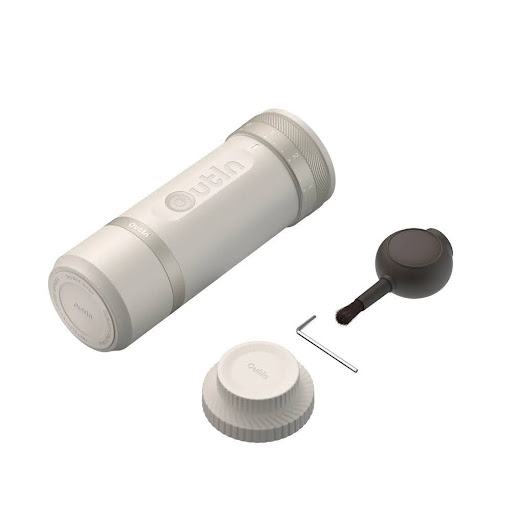
Ceramic burrs represent the gold standard for grinding mechanisms regardless of the grinder’s outer construction. This material stays sharper longer than steel alternatives, maintaining consistent grind quality across thousands of uses without requiring replacement. Ceramic generates minimal heat during operation, preserving the delicate aromatic compounds in your coffee beans. The brittleness of ceramic requires careful handling—a significant drop onto concrete can chip or crack the burrs, rendering the grinder useless. Many manufacturers combine ceramic burrs with protective outer casings of steel or reinforced plastic, creating hybrid designs that balance performance with travel resilience.
Popular Types of Coffee Grinders
Manual coffee grinders dominate the travel market due to their independence from power sources and lightweight construction. These hand-cranked devices use your physical effort to rotate the burrs, making them functional anywhere from mountaintops to airplane seats. The grinding process requires consistent circular motion, with most models featuring ergonomic handles that fold flat against the body for storage. Manual grinders excel in reliability since they contain no electronic components that might fail or require charging during extended trips. Their quiet operation becomes advantageous in shared accommodations where early morning grinding won’t disturb roommates or fellow travelers.
Electric travel grinders prioritize speed and convenience, completing grinding tasks in a fraction of the time required by manual alternatives. These battery-powered devices typically use rechargeable lithium-ion cells that connect via USB-C cables, integrating seamlessly with the chargers you already carry for phones and laptops. The motorized burrs deliver consistent results with minimal physical effort, particularly valuable after long travel days when you lack energy for manual cranking. However, electric models add weight and complexity to your packing list, and you must monitor battery levels to avoid being stranded without grinding capability in locations with limited charging access.
Cordless grinders represent a hybrid category that combines portability with electric convenience through compact battery designs. These units often feature detachable power banks that can charge other devices, adding versatility to your travel kit. The self-contained power systems eliminate the need for wall outlets, making them suitable for car camping, beach trips, and outdoor adventures where manual grinding becomes tedious. Most cordless models include multiple grind settings accessible through simple button controls, allowing quick adjustments between brewing methods without disassembling the device.
How to Choose the Right Coffee Grinder
Start by assessing your typical travel duration and frequency to determine capacity requirements. For weekend trips or business travel lasting three to five days, a grinder with a 20-gram hopper capacity suffices, providing enough for two to three cups daily without requiring frequent refills. Extended journeys spanning weeks demand larger hoppers holding 30 to 40 grams, though this increases size and weight. Consider whether you’ll have access to fresh beans during travel—if purchasing locally is feasible, smaller capacity works perfectly and reduces the temptation to carry excessive bean supplies that add luggage weight.
Your brewing method directly influences grinder selection since different techniques demand specific grind consistencies. Pour-over enthusiasts need grinders offering precise adjustment steps between medium-coarse and medium-fine settings, allowing fine-tuning for optimal extraction. Espresso drinkers require models capable of producing uniformly fine grounds, which typically means conical burr systems with stepped adjustment rings. If you switch between multiple brewing methods while traveling, prioritize grinders with at least 15 distinct settings that span the full coarseness spectrum. Test the adjustment mechanism before purchasing—it should click firmly into position without slipping during grinding.
Evaluate your travel style and accommodation types to match grinder characteristics with real-world usage scenarios. Backpackers staying in hostels benefit from ultra-compact manual grinders under 10 ounces that operate silently during early departures. Business travelers with hotel access can accommodate slightly heavier electric models that offer convenience after long workdays. Adventure travelers visiting remote locations should choose manual grinders with sealed mechanisms that resist dust and moisture infiltration. Consider whether you’ll grind in your accommodation or outdoors—outdoor grinding favors models with non-slip bases or integrated storage that prevents bean spillage in windy conditions.
Top Travel Coffee Grinders on the Market
The Timemore Chestnut C2 has earned its reputation among traveling coffee enthusiasts through a combination of precision engineering and practical design. This manual grinder features a dual-bearing stabilization system that eliminates wobble during grinding, producing remarkably uniform particles across its 15 adjustment settings. The aluminum body keeps weight at just 14 ounces while maintaining structural rigidity, and the folding handle stores flush against the body for compact packing. Its 25-gram capacity handles enough beans for two generous cups, making it ideal for solo travelers or couples. The C2’s conical stainless steel burrs deliver consistent results whether you’re grinding for pour-over or AeroPress, and the sealed bearing assembly prevents coffee dust infiltration that degrades performance over time.
For travelers prioritizing speed and convenience, the JavaPresse Manual Coffee Grinder offers excellent value with straightforward functionality. This budget-friendly option weighs only 11 ounces and measures seven inches tall, fitting easily into carry-on bags or backpack side pockets. The ceramic conical burr system provides 18 click-stop settings that accommodate various brewing methods, from cold brew to espresso. Its transparent body allows visual monitoring of the grinding process, while the built-in grounds container eliminates the need for separate collection vessels. The grinder’s simplicity means fewer components that might fail during travel, though the plastic construction requires gentler handling than metal alternatives.
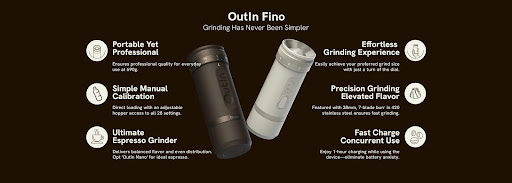
Electric grinder enthusiasts gravitate toward models like the OutIN Nano for portable power that doesn’t compromise on grind quality. Compact rechargeable units in this category typically grind 18 grams of beans in approximately 15 seconds, providing 20 to 25 grinding sessions per charge through USB-C connections compatible with standard phone chargers. Stepless adjustment systems offer infinite grind size customization between coarse and fine settings, appealing to coffee perfectionists who demand precise control. While these grinders represent the heavier end of travel options at around 1.2 pounds, the weight comes from robust construction that withstands baggage handling abuse. Detachable grounds cups prevent spills during transport, and low-profile designs fit into laptop compartments in most travel bags.
User Reviews and Testimonials
Sarah Mitchell, a digital nomad who spent eight months traveling through Southeast Asia, describes her manual grinder as “the one piece of gear I used literally every single day.” She emphasizes how the compact design survived countless bus rides and budget airline flights without damage, noting that “having quality coffee in remote Vietnamese villages made those early mornings infinitely better.” Her experience highlights the reliability factor that matters most during extended international travel.
Business consultant James Rodriguez takes a different approach with his electric grinder, stating it “saves precious minutes during hectic morning schedules in unfamiliar hotel rooms.” After testing his device across 40 cities in two years, he appreciates the consistent results that eliminate the guesswork from jet-lagged mornings. However, he admits that “remembering to charge it became part of my evening routine, just like charging my phone.”
Adventure photographer Lisa Chen offers perspective from extreme conditions, explaining how her ceramic burr grinder “performed flawlessly at 12,000 feet in the Andes and in humid rainforest camps.” She values the sealed construction that prevented moisture damage during a month-long expedition where equipment faced constant environmental challenges. Her testimonial underscores the importance of durability for travelers venturing beyond typical tourist infrastructure.
Tips for Using a Travel Coffee Grinder
Pre-measure your coffee beans the night before to streamline your morning routine, especially when dealing with early flights or rushed departures. Store measured portions in small airtight containers or resealable bags that protect beans from moisture and crushing during transit. This preparation eliminates the need to fumble with bean bags and scales when you’re half-awake in unfamiliar accommodations. When grinding, place your coffee bean grinder machine on a stable surface or hold it firmly against your body to maintain consistent pressure and prevent slippage that creates uneven particle sizes. For manual grinders, establish a steady cranking rhythm rather than rushing—slow, continuous rotations produce more uniform grounds than quick, jerky movements. Empty the grounds chamber completely after each use to prevent stale coffee residue from contaminating your next batch. If you’re grinding in shared spaces, consider doing your preparation in bathrooms or outdoor areas where the noise won’t disturb others. Always check your grinder’s adjustment setting before adding beans, as travel jostling can shift the mechanism to unintended positions that ruin your grind consistency.
Maintenance and Cleaning
Regular cleaning prevents rancid coffee oils from accumulating in your grinder’s burrs and chambers, which can impart bitter flavors to fresh beans. Disassemble your grinder weekly during travel and use a soft brush to remove trapped grounds from burr surfaces and threading. For deeper cleaning every two weeks, wipe ceramic burrs with a slightly damp cloth, then dry thoroughly before reassembly to prevent moisture damage. Avoid submerging electric components in water—instead, use compressed air or a dry brush for motor housings. Store your grinder in a protective pouch between uses to shield it from luggage debris and impacts that could misalign burrs or damage adjustment mechanisms.
Finding Your Perfect Travel Companion
Selecting the right travel coffee grinder transforms your journeys from caffeinated compromises into opportunities for exceptional coffee experiences, regardless of your destination. The decision ultimately hinges on balancing portability with performance, weighing the convenience of electric models against the reliability of manual alternatives, and choosing materials that withstand your specific travel conditions. Whether you prioritize the lightweight simplicity of a manual grinder for backpacking adventures or the speed of an electric model for business trips, understanding your travel patterns and brewing preferences guides you toward the ideal choice.
The investment in a quality travel grinder pays dividends beyond just better-tasting coffee. It grants independence from overpriced hotel coffee and questionable café options in unfamiliar cities, while creating a comforting ritual that anchors your mornings amid constantly changing environments. By considering the key features outlined in this guide—from burr quality and adjustment range to durability and capacity—you’ll find a grinder that seamlessly integrates into your travel routine. Remember that the best travel coffee grinder isn’t necessarily the most expensive or feature-rich option, but rather the one you’ll consistently use and maintain throughout your adventures, bringing the pleasure of freshly ground coffee to every destination on your itinerary.