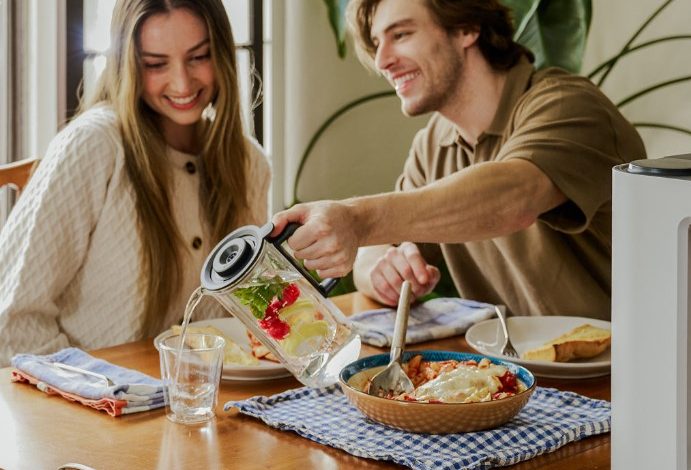
You fill a glass from the kitchen tap, and before handing it to your child, a familiar thought creeps in: what’s actually in this water? For millions of parents, that moment of hesitation is becoming harder to ignore. Among the many substances lurking in municipal water supplies, fluoride stands out as a particular concern for growing children. While added intentionally in many regions for dental health, excessive fluoride exposure during critical developmental years can pose real risks that no parent should overlook.
Reverse Osmosis technology offers a proven, comprehensive answer to this challenge—capable of stripping fluoride and dozens of other contaminants from your family’s drinking water. But traditional RO systems often require complex plumbing work and dedicated space beneath the sink, putting them out of reach for many households. That’s where a countertop water system changes the equation entirely, delivering professional-grade purification without the installation headaches. This article will walk you through the science behind fluoride removal, help you understand what makes an effective filtration system, and guide you toward a practical, informed decision that safeguards your children’s health every single day.
Why Fluoride Removal is Crucial for Children’s Health
Fluoride occupies an unusual position in public health conversations. In controlled, small doses—like those in toothpaste—it strengthens tooth enamel and helps prevent cavities. But the story shifts dramatically when children consume too much of it through their drinking water day after day. The challenge for parents is that fluoride accumulates over time, and young bodies are far more vulnerable to its effects than adults. Children drink more water relative to their body weight, their kidneys are less efficient at excreting fluoride, and their developing bones and brains are uniquely susceptible to disruption.
Beyond the kitchen tap, fluoride enters a child’s system through reconstituted formula, juices made with fluoridated water, processed foods, and even some medications. This cumulative exposure makes it nearly impossible to control intake without addressing the primary source: the water itself. And here’s the critical gap most parents don’t realize—standard carbon filters, the kind found in popular pitcher filters and basic faucet attachments, simply cannot remove fluoride. These filters excel at improving taste by reducing chlorine, but fluoride passes straight through their activated carbon media as if the filter weren’t there at all. Protecting your child requires a fundamentally different approach to filtration.
The Hidden Health Risks of Excessive Fluoride in Children
Dental fluorosis is the most visible consequence of overexposure during childhood. It occurs when excess fluoride disrupts enamel formation in developing teeth, leaving permanent white streaks, brown staining, or pitting that ranges from mild cosmetic concerns to structural damage. The CDC estimates that approximately 65% of American adolescents now show some degree of fluorosis—a figure that has risen steadily alongside increased fluoride sources in modern diets. Beyond dental effects, a growing body of research has raised parental concerns about potential impacts on cognitive development. Several large-scale studies have observed associations between elevated fluoride exposure in early childhood and lower IQ scores, prompting organizations including the National Toxicology Program to flag this as an area requiring precaution. While the scientific community continues to investigate these links, many parents reasonably prefer not to wait for definitive conclusions when their children’s formative years are passing in real time. Controlling fluoride intake during these critical developmental windows—from infancy through adolescence—represents a straightforward precautionary step.
Why Your Current Filter Might Not Be Enough
Most households that use water filters rely on activated carbon technology. These systems do a respectable job with certain tasks: they reduce chlorine taste and odor, trap sediment particles, and may catch some organic compounds. If better-tasting water is your only goal, they work fine. But fluoride is a dissolved ion—it’s fully integrated into the water at a molecular level, and carbon simply has no mechanism to capture it. The same limitation applies to other dissolved contaminants that threaten children’s health: lead, arsenic, nitrates, and chromium-6 all pass through standard carbon filters largely unaffected. Gravity-fed pitchers, refrigerator filters, and basic faucet-mount units share this fundamental shortcoming. To remove dissolved solids and ions like fluoride, you need a filtration barrier that operates at the molecular level—one that physically separates water molecules from the contaminants dissolved within them. This is precisely what Reverse Osmosis technology delivers, and it’s why RO represents a necessary upgrade for any family serious about fluoride reduction.
Solving the Problem: Choosing the Right Water Filtration System
Once you understand that standard filters can’t touch fluoride, the next question becomes: what actually works? The answer, backed by decades of water treatment science and endorsed by the EPA as a best available technology for fluoride reduction, is Reverse Osmosis. RO isn’t new—it’s been used in industrial water purification, desalination plants, and medical facilities for years. What has changed is its accessibility for everyday families. Modern RO systems have become compact, efficient, and remarkably simple to operate, making hospital-grade water purification available right on your kitchen counter.
For parents weighing their options, the decision typically comes down to three categories: pitcher filters, under-sink RO systems, and countertop RO systems. Pitchers are convenient but ineffective against fluoride and heavy metals—we’ve established that. Under-sink systems deliver excellent purification but demand professional installation, permanent plumbing modifications, and significant cabinet space. They’re also off-limits for renters and impractical for families who move frequently. A countertop water system threads the needle perfectly: it matches the purification power of under-sink units while requiring nothing more than a power outlet and a connection to your existing faucet. No drilling, no plumber, no landlord permission needed.
The Role of Reverse Osmosis (RO) in Comprehensive Fluoride Removal
Reverse Osmosis works by forcing water through a semi-permeable membrane with pores so microscopically small—approximately 0.0001 microns—that only water molecules can pass through. Fluoride ions, which exist in water as dissolved particles, are physically too large to penetrate this barrier and get flushed away with the rejected concentrate. This isn’t a chemical reaction or an absorption process that can become saturated; it’s a physical separation that remains consistently effective throughout the membrane’s lifespan. Systems certified to NSF/ANSI Standard 58 have been independently verified to reduce fluoride by 90% or more under standard testing conditions. Beyond fluoride, that same membrane simultaneously blocks lead, arsenic, chromium-6, nitrates, pharmaceutical residues, and total dissolved solids—creating a single comprehensive barrier against the full spectrum of contaminants that threaten children’s health.
Why a Countertop Water System is the Smart Family Choice
The genius of a countertop RO system lies in what it eliminates from the equation: complexity. Easy installation means you unbox it, place it on your counter, attach a simple adapter to your kitchen faucet, plug it in, and start purifying water within minutes. There’s no need to clear out under-sink storage, hire a plumber, or drill holes in your countertop. For renters, this is transformative—you get the same fluoride removal performance as a permanently installed system without modifying anything in your apartment. When you move, the system moves with you. The compact footprint occupies roughly the same counter space as a coffee maker, making it viable even in smaller kitchens. For families who want professional-grade water purification without a professional-grade commitment, this format simply makes the most sense.
What to Look For: Ensuring Effective Heavy Metals Removal
Fluoride removal alone, while critical, shouldn’t be the only criterion guiding your purchase. Children are equally vulnerable to heavy metals like lead, mercury, and hexavalent chromium—contaminants that can leach from aging pipes and persist in municipal supplies despite treatment. An effective system employs multi-stage filtration to address the full range of threats. A quality countertop RO unit typically includes a sediment pre-filter to catch particles and protect the membrane, an activated carbon pre-filter to remove chlorine that could degrade the membrane prematurely, the RO membrane itself for heavy metals removal and fluoride reduction, and a carbon post-filter to polish taste before the water reaches your glass. Each stage serves a specific protective purpose, and together they create redundant barriers that ensure nothing harmful makes it into your child’s cup. When evaluating systems, look for published removal rates for specific contaminants and third-party testing verification rather than vague marketing claims about “pure water.”
System Spotlight: Bluevua’s Innovative Design for Family Needs
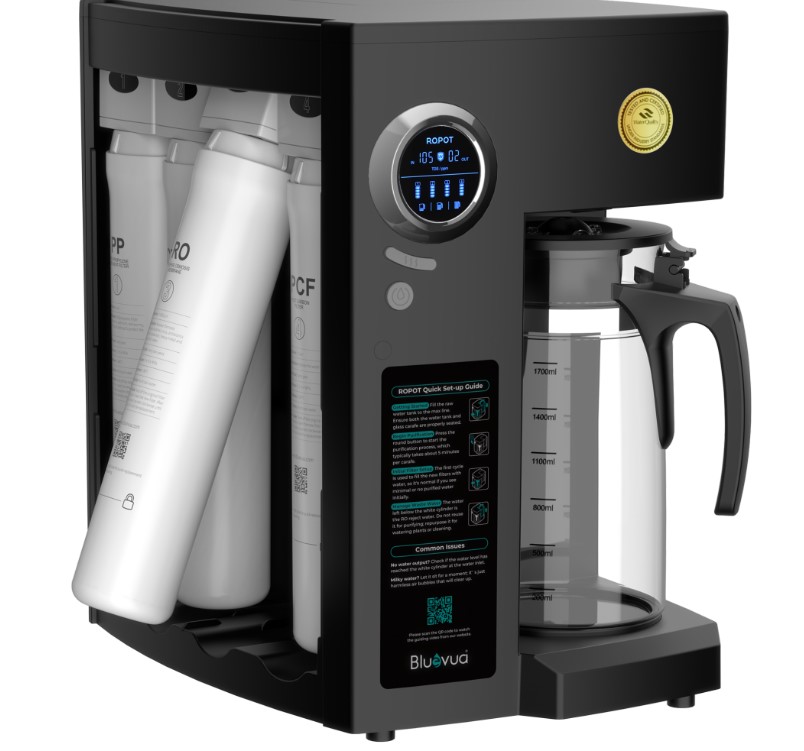
When theory meets practice, what does a family-ready countertop RO system actually look like? Bluevua has emerged as a compelling example of how thoughtful engineering can translate complex water purification science into something any parent can confidently use daily. Designed specifically with household convenience in mind, the system consolidates everything—filtration stages, water storage, and dispensing—into a single countertop unit that requires no permanent modifications to your kitchen.
An Overview of the Bluevua Countertop RO System
The Bluevua system operates as a self-contained all-in-one unit, meaning the water tank, filtration assembly, and dispensing mechanism are integrated into a single appliance. This eliminates the tangle of tubes and separate components that characterize traditional RO installations. The built-in storage tank holds enough purified water for a family’s immediate drinking and cooking needs, while the production rate ensures the tank refills efficiently between uses. The compact form factor sits comfortably beside other kitchen appliances without dominating counter space, and the clean aesthetic blends naturally into modern kitchens. For families with young children, the streamlined design also means fewer exposed parts that curious hands might tamper with.
Key Innovations that Simplify Home Water Safety
What sets this system apart is its innovative design philosophy centered on removing friction from the purification process. Smart indicator lights on the unit provide real-time feedback on filter life and water quality status—parents know at a glance whether the system is performing optimally without needing to track replacement schedules manually. One-touch operation means filling a glass of purified water requires no more effort than pressing a single button, making it accessible even for older children to use independently. The system also incorporates an automatic self-cleaning function that periodically flushes the internal components, maintaining hygiene and membrane performance without requiring parents to remember yet another household task. These aren’t gimmicks—each feature directly addresses the reality that busy families need their water system to work reliably in the background without demanding constant attention.
Performance Review: Fluoride and Heavy Metals Removal Effectiveness
Where Bluevua truly delivers on its promise to families is in measurable contaminant reduction. The system’s multi-stage filtration process targets fluoride removal at rates consistent with NSF/ANSI Standard 58 benchmarks, meaning parents can trust that the vast majority of fluoride present in their tap water never reaches their child’s glass. Equally important, the RO membrane and complementary filter stages address lead, arsenic, mercury, chromium-6, and other heavy metals that pose serious developmental risks to children. The multi-barrier approach—sediment filtration, carbon pre-treatment, reverse osmosis separation, and carbon post-polishing—creates redundant layers of protection. If one stage is slightly less effective on a particular day due to water pressure fluctuations or source water variability, subsequent stages compensate. For parents, this translates into consistent, dependable purification performance regardless of what’s happening with their local water supply. The result is water you can hand to your child without that familiar moment of hesitation.
Practical Guide: Easy Installation for Your Countertop Water System
One of the biggest barriers to better water purification has always been the installation process itself. Under-sink systems require drilling, plumbing knowledge, and often a professional’s help—turning what should be a health decision into a home improvement project. A countertop RO system eliminates this barrier entirely, putting you minutes away from purified water without touching a single pipe under your sink. The entire process is designed so that any parent, regardless of technical skill, can have the system running before their next glass of water.
Your Pre-Installation Checklist and Simple Setup Steps
Before you begin, gather what you need—which is essentially nothing beyond what comes in the box. No wrenches, no drill bits, no plumber’s tape. Simply identify a spot on your counter within reach of both a standard electrical outlet and your kitchen faucet. The system needs a flat, stable surface with enough clearance for the water tank to be filled and accessed comfortably. Once you’ve chosen your location, the setup unfolds in a straightforward sequence. First, attach the included faucet adapter to your kitchen tap—this universal connector fits most standard faucets and takes seconds to hand-tighten. Next, connect the inlet tubing from the system to the adapter. Place the unit on your chosen counter space and plug it into the outlet. Power the system on, and it will begin its initial filtration cycle automatically. This first cycle flushes the filters and membrane, preparing them for daily use. Most manufacturers recommend discarding the first one or two tanks of water produced during this break-in period, as carbon fines and membrane preservatives need to be rinsed away. After that initial flush—typically completed within thirty minutes to an hour—your system is producing clean, fluoride-free water ready for your family.
Maintenance Made Simple for Busy Parents
Ongoing maintenance requires minimal effort but delivers maximum peace of mind. The sediment and carbon pre-filters typically need replacement every three to six months, depending on your source water quality. The RO membrane itself lasts considerably longer—usually twelve to twenty-four months before performance begins to decline. The carbon post-filter generally follows the same schedule as the pre-filters. You don’t need to memorize these timelines. Modern countertop systems include smart indicator lights that alert you when a specific filter is approaching the end of its effective life. When the indicator signals, you simply open the filter compartment, remove the spent cartridge, and slide in the replacement—a process that takes under two minutes with no tools required. Between filter changes, the system’s automatic self-cleaning function handles internal maintenance on its own, flushing the membrane periodically to prevent buildup and maintain consistent ro filter fluoride removal performance. For busy parents juggling school schedules, meal prep, and everything else, this means your water purification system demands attention only a few times per year while quietly protecting your family every single day in between.
Protecting Your Family’s Water: A Simple Step Toward Lasting Health
Every glass of water your child drinks during their formative years matters. Fluoride and heavy metals like lead, arsenic, and chromium-6 pose genuine developmental risks that standard carbon filters simply cannot address—a reality too many families discover only after years of false confidence in inadequate filtration. Reverse Osmosis remains the most reliable, scientifically validated method for removing these dissolved contaminants at the molecular level, and today’s countertop systems make that protection accessible to virtually any household.
A countertop RO system combines superior multi-stage filtration with easy installation that requires no plumbing expertise, no permanent modifications, and no professional help. You gain the same purification performance as complex under-sink units while maintaining the flexibility to move, rearrange, or upgrade on your own terms. Bluevua exemplifies this approach—delivering innovative design features like smart filter monitoring, one-touch dispensing, and automatic self-cleaning in a compact format built for real family life. The step you’re considering isn’t complicated or disruptive. It’s a single decision, a few minutes of setup, and then years of confidence every time your child reaches for a glass of water. That peace of mind isn’t a luxury—it’s something every family deserves.