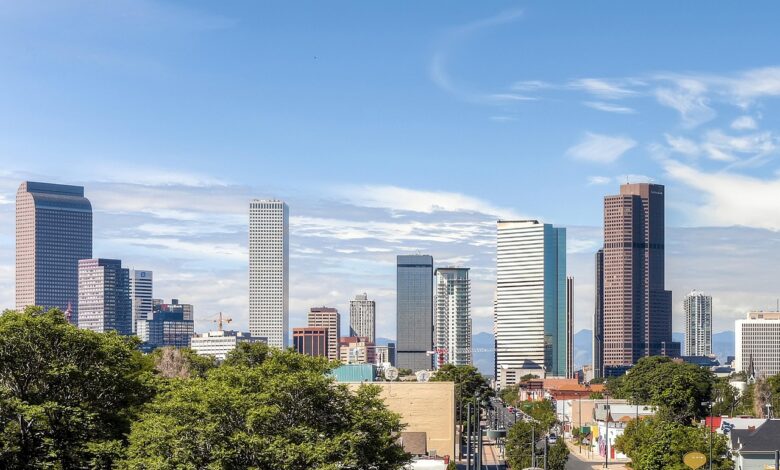
Rising a mile above sea level, Denver embodies a unique blend of frontier heritage and modern ambition—a duality mirrored in its clocks. From the resonant chimes of historic neighborhoods to the gleaming timepieces atop corporate towers, the city’s approach to time reflects growth, precision, and communal rhythm. In Denver, keeping time is more than tracking hours; it’s a cultural heartbeat, honoring the past while guiding the future.
A Historical Perspective on Time in Denver
Long before skyscrapers pierced the Mile High City’s skyline, Denver’s residents relied on the simplest measures to mark the passing hours. Sundials in public squares, church bells, and the rhythmic toll of town clocks guided daily life, while railroads introduced a new urgency: the need for coordinated schedules. As commerce and travel expanded in the 19th century, the concept of standardized time became essential. It was during this era that local time in Denver began to align more formally with national systems, bridging the gap between isolated frontier life and the growing demands of a connected world. This evolution influenced everything from business practices to social routines, shaping how the city experienced each day. Understanding Denver’s historical approach to time reveals not just technological progress, but a cultural adaptation—how a frontier settlement synchronized with the broader rhythm of an emerging nation.
Time Zones and the Mile High Difference
Denver’s position in the Mountain Time Zone places it two hours behind the Eastern Seaboard and one hour ahead of the Pacific Coast, creating a subtle but meaningful “Mile High difference” in scheduling and communication. For travelers, understanding this time shift is crucial: flights, train departures, and cross-country meetings all depend on precise coordination. Businesses in Denver routinely navigate interactions across multiple zones, ensuring that conference calls and deadlines align with partners in New York, Los Angeles, or Chicago. The Mountain Time Zone also subtly shapes daily life, influencing everything from television programming to work hours and recreational schedules. Beyond practicality, the time zone reinforces Denver’s identity as a city at a crossroads—geographically central, yet uniquely elevated. Its temporal positioning mirrors the city’s cultural and economic role as a hub, connecting the rhythms of the nation while maintaining a pace distinctly its own.
Daylight Saving Time and Seasonal Shifts
Daylight saving time brings a noticeable shift to life in Denver, advancing clocks in spring and retreating them in fall. For residents, the extra evening light in warmer months encourages outdoor activities—from jogging along Cherry Creek to hiking in the nearby Rockies—extending the city’s famed active lifestyle. Businesses also adapt, often adjusting hours to match customer patterns and maximize daylight-driven productivity. However, the practice sparks debate: some argue the semiannual change disrupts sleep schedules and complicates transportation, while others appreciate the energy savings and longer daylight for leisure. Local opinions are divided, yet the rhythm of daylight saving has become part of Denver’s seasonal identity, marking a subtle transition in the city’s daily pulse. Beyond convenience, it highlights the interplay between human schedules and natural cycles, a reminder that even in a technologically advanced city, the sun’s movement continues to shape routines and cultural habits.
Time and Economic Activity
Time in Denver plays a pivotal role in shaping the city’s economic activity, influencing both local commerce and global connections. Positioned in the Mountain Time Zone, Denver often bridges the temporal gap between the East Coast financial markets and the West Coast tech hubs. Stock traders, entrepreneurs, and remote teams rely on precise scheduling that aligns with Denver local time and date to synchronize meetings, launch projects, and respond to market fluctuations. Local businesses, from retail shops to corporate offices, adjust hours to accommodate partners and customers across the country, ensuring smooth operations despite differing time zones. The city’s tech and startup sectors, in particular, leverage Denver’s temporal position to collaborate efficiently with national and international clients, creating a competitive advantage. Beyond efficiency, this coordination shapes the city’s identity as a connected economic hub, where every hour carries both local rhythm and global significance.
Final Thoughts:
Time in Denver is more than numbers on a clock; it’s a reflection of the city’s history, culture, and ambitions. From early sundials and railroad schedules to the precision of modern digital systems, Denver has continually adapted to balance local rhythms with national and global demands. The Mountain Time Zone, daylight saving shifts, and iconic public clocks all shape daily life, economic activity, and communal identity. Understanding how the Mile High City keeps time offers a window into its character—a city elevated not just in altitude, but in perspective, where every moment connects past, present, and future in a uniquely Denver cadence.
FAQ:
- Why is Denver called the Mile High City?
Denver sits approximately 5,280 feet above sea level, earning it the nickname “Mile High City.” This elevation affects everything from climate to daily routines, including how residents experience daylight and time. - What time zone is Denver in?
Denver is in the Mountain Time Zone (MT), which is two hours behind Eastern Time and one hour ahead of Pacific Time. This positioning influences business hours, travel schedules, and communication across the U.S. - How does daylight saving time impact Denver?
Daylight saving time shifts the clocks forward in spring and back in fall, affecting daily routines, outdoor activities, and business hours. Opinions are mixed, with some enjoying longer evenings and others noting sleep disruptions. - Are there notable public clocks in Denver?
Yes. Historic landmarks and downtown installations, from courthouse clocks to modern digital displays, showcase the city’s relationship with time while serving as both practical tools and cultural icons.