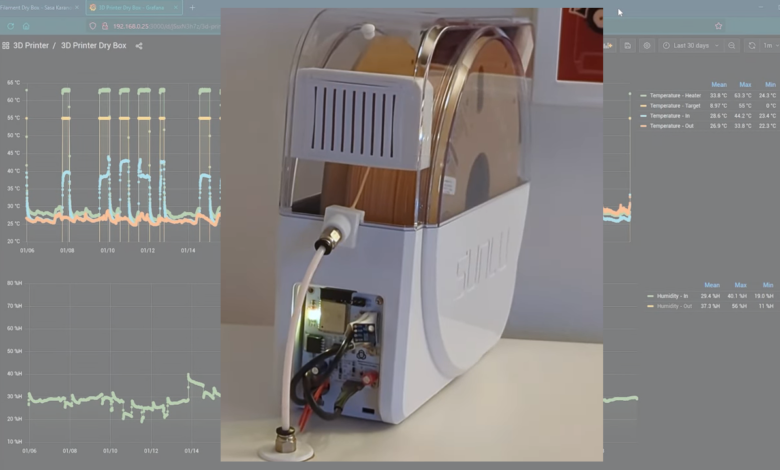
3D printing can sometimes get quite tricky, especially when we include external factors like moisture. If you have done 3D printing before, you might already be familiar with the term Filament Dryer Boxes.
These devices help reduce or remove moisture from your filaments, which is essential for some filaments since they cannot print once they become moist. But do you actually need a filament dryer box? In this guide, we are going to cover everything you need to know.
Introducing the Filament Dryer Box
A filament dryer box is essentially a device that prevents moisture from rotting away your 3D printer filaments. It incorporates things like a heating element, humidity control, and a completely sealed environment so that there is no way moisture will end up ruining your results. Advanced filament dryer boxes also come with temperature-adjusted options, making them useful in cases where you want your 3D printers to be precise and accurate.
Moisture is one of the biggest enemies of your 3D prints in general. With many filaments being hygroscopic, like PLA, PETG, TPU, and Nylon, you must be careful when it comes to a moisture-filled environment. In many Asian countries, the monsoon season is when moisture becomes a problem.
These filaments are more prone to absorbing moisture, which ultimately changes the expected 3D print that you are trying to create.
Moisture in 3D Printing – A Hidden Villain
How exactly is moisture the hidden villain in 3D printing? The thing is that moisture in filaments doesn’t just evaporate but gets absorbed in it. When your filament is heated in the hotend, the moisture takes the form of steam, which is why it expands into bubbles that mess up the whole flow and structure of your 3D printed material.
Moreover, this can cause a host of issues, including:
- Bad Layer Adhesion: The moisture can ultimately affect the bonding between layers, resulting in poor prints.
- Stringing/Oozing: Steam pressure can also cause uncontrollable oozing during the 3D printing process, making it difficult for you to control it.
- Clogging: Another common issue is nozzle clogging, which can happen due to wet filaments. Those filaments can degrade and cause clogs in the 3D printer nozzles.
- Brittleness: Your prints can be more brittle and ultimately snap due to the moisture added.
If you have experienced any of the following issues, chances are that moisture is ruining your 3D printing game. But before we go deep into the world of a filament dryer box, you also need to understand which filament is the most affected by moisture and whether you even need a filament dryer box or not.
How Filaments Are Affected by Moisture (And Which Ones)
Not all filaments are affected by moisture, but the ones that are affected store the humidity and are ultimately unable to be printed at their full potential. We have the PLA filament, which is known for having a decent amount of moisture storage, but it is not something otherworldly.
ABS is low when it comes to storing moisture, but filaments such as PETG, Nylon, TPU, and PVA are some of the most notoriously moisture-storing filaments on the market today. In general, filaments should be protected from moisture.
For example, if you leave TPU or Nylon outside for a few hours, it will definitely absorb moisture, which will ultimately affect your 3D printing quality. So, do you need a filament dryer box? Let’s find out.
Do You Need a Filament Dryer Box?
First, let’s understand the features and the benefits that come with a filament dryer box. Chitu Systems FilaPartner E1 Filament Dryer is one of the best products you can buy if you want a versatile box with two chambers and a spool fuel option.
This product allows you to store and dry your filament anywhere in the world, making your job as a 3D printing enthusiast a lot easier and chill. The filament dry box incorporates a dryer, two chambers, and 4 presets options so that you don’t have to do the thinking.
Moreover, it has a larger capacity of storing four color or four spools, each limited to 1 KG of weight. The technology that Chitu System uses in their product is a 360 degrees circulating heated fan that helps in automatic drying of the filaments that you own.
To make things interesting, you can even adjust the temperature of these filaments to between 45 degrees and it can go up to 70 degree celsius, which is ideal for drying out your filaments. With all that said, we have incorporated both scenarios in which you need and not need a filament dryer box.
Why You Need a Filament Dryer Box
If you live in a humid environment like one of the Asian countries where in summer, humidity is a huge issue, then you might want to consider a filament dryer box. Moreover, if you are using PETG, Nylon, or TPU, then a dryer box is a must-have because these filaments will absorb moisture really fast.
While you can use a sealed container to store your filaments to avoid moisture, if you don’t have a proper sealed box and your filaments are often stored in open air, then you also should get a filament dryer box as it will help you a lot. In all of these cases, having a dryer box can boost your overall 3D printing results while also saving you money and time in the long run.
Why You Don’t Need a Dryer Box
If you are living in a dry environment and are using a filament like PLA, then you won’t need a dry box. Moreover, if you have a sealed box and your filaments are stored in it, you also don’t need a filament drying box.
Final Verdict
A filament dryer box is one of the most innovative products you can get, especially if you are having issues with your print quality. If you want to upgrade your 3D printing experience further, then check out Chitu System and their vast array of 3D printer accessories.