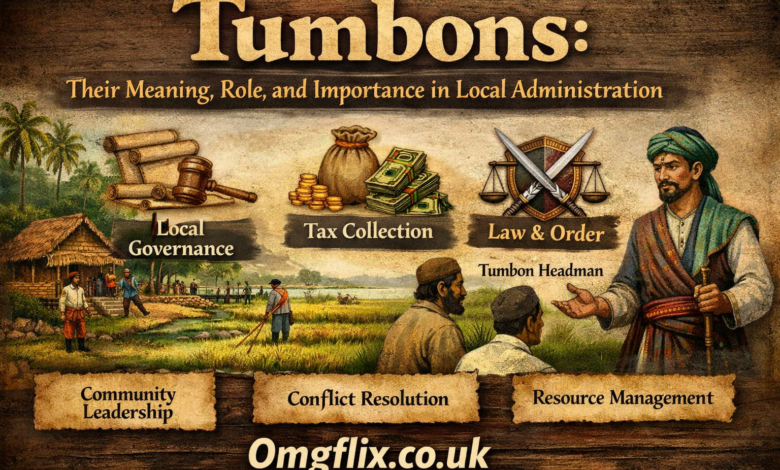
The term tumbons may not be widely familiar outside Southeast Asia, yet it plays a crucial role in understanding local governance, geography, and community life—particularly in Thailand. Often translated as “subdistricts,” tumbons represent a foundational layer of administrative organization that directly affects everyday life, public services, and cultural identity. This article explores what tumbons are, how they function, their historical roots, and why they remain significant in the modern era.
What Are Tumbons?
Tumbons (sometimes spelled tambons) are administrative subdivisions commonly used in Thailand. They exist below the district level and above the village level in the country’s administrative hierarchy. In simple terms, a tumbon is a subdistrict made up of several villages that share governance, infrastructure, and public resources.
Thailand’s administrative structure typically follows this order:
-
Province
-
District (Amphoe)
-
Tumbon
-
Village (Muban)
Each tumbon includes multiple villages and serves as an essential link between district authorities and local residents. Because of their position in the hierarchy, tumbons are often the most relevant administrative unit for local planning, community services, and development initiatives.
The Historical Background of Tumbons
The concept of tumbons has deep historical roots. Long before modern administrative systems were introduced, local communities in Thailand organized themselves around shared land, water resources, temples, and cultural traditions. Over time, these naturally formed community clusters evolved into formal administrative units recognized by the state.
During periods of administrative reform in the late 19th and early 20th centuries, Thailand standardized its territorial divisions to improve governance, taxation, and public order. Tumbons were officially incorporated into this system, allowing the central government to maintain structure while preserving local identity and leadership.
Governance and Administration at the Tumbon Level
Each tumbon typically has its own local administrative organization. Depending on population size and development level, this may be a Tambon Administrative Organization (TAO) or, in more urbanized areas, a subdistrict municipality.
The responsibilities of tumbon administrations often include:
-
Maintenance of local roads and public spaces
-
Waste management and sanitation
-
Water supply and drainage
-
Support for education and local schools
-
Public health initiatives
-
Promotion of local culture and traditions
Because tumbons operate close to the community, they are often better positioned to understand local needs than higher administrative levels. This makes them especially important for grassroots development and citizen participation.
Tumbons and Community Identity
One of the most significant aspects of tumbons is their role in preserving community identity. Each tumbon often has its own history, traditions, dialects, and cultural practices. Local festivals, temples, markets, and crafts are frequently associated with specific tumbons, giving residents a strong sense of belonging.
For many people, identifying with a tumbon is just as meaningful as identifying with a province or region. This local identity helps strengthen social bonds and encourages community cooperation, especially in rural areas.
Economic Importance of Tumbons
Tumbons also play an important role in local economies. Many are centers of agriculture, handicrafts, or small-scale industries. Government programs aimed at rural development often target tumbons directly, providing funding, training, and infrastructure improvements.
A well-known example is community-based economic initiatives that promote local products, such as traditional textiles, food items, or agricultural goods. These programs help tumbons become economically self-sufficient while preserving local knowledge and skills.
Tumbons in Tourism and Geography
From a geographic and tourism perspective, tumbons are increasingly relevant. Travel guides, maps, and official addresses frequently reference tumbons to describe locations more precisely. Many tourist attractions—such as waterfalls, temples, homestays, and eco-tourism sites—are promoted at the tumbon level.
For travelers seeking authentic experiences, exploring individual tumbons can offer deeper insights into local life compared to visiting major cities alone. This has led to the rise of community-based tourism initiatives managed directly by tumbon administrations or local cooperatives.
Modern Challenges and Digital Transformation
Like many local administrative units worldwide, tumbons face modern challenges. These include urban migration, limited budgets, environmental concerns, and the need for digital infrastructure. Younger generations often move to cities, leaving some tumbons with aging populations and workforce shortages.
To address these issues, many tumbons are embracing digital transformation. Online services, digital records, and social media platforms are increasingly used to communicate with residents, promote local events, and attract visitors or investors. This blend of traditional community values and modern technology is shaping the future of tumbons.
Why Tumbons Still Matter Today
Despite globalization and urban expansion, tumbons remain highly relevant. They represent governance at a human scale—close enough to people’s daily lives to be practical, yet structured enough to support organized development. Policies implemented at the tumbon level often have immediate and visible impacts, from cleaner streets to better schools and stronger community networks.
Understanding tumbons also provides valuable insight into how local administration works in Thailand and similar systems worldwide. They demonstrate how decentralized governance can empower communities while maintaining national unity.
Read More: Beata Galloway: Exploring the Curiosity Behind the Name and Its Digital Presence
Conclusion
Tumbons are far more than simple administrative labels. They are living communities with histories, cultures, economies, and identities of their own. Serving as the bridge between villages and districts, tumbons play a vital role in governance, development, and everyday life. As they adapt to modern challenges through innovation and community engagement, tumbons continue to shape the social and cultural landscape in meaningful ways.
Whether viewed through the lens of administration, culture, tourism, or local development, tumbons remain an essential and fascinating component of regional organization and community life.