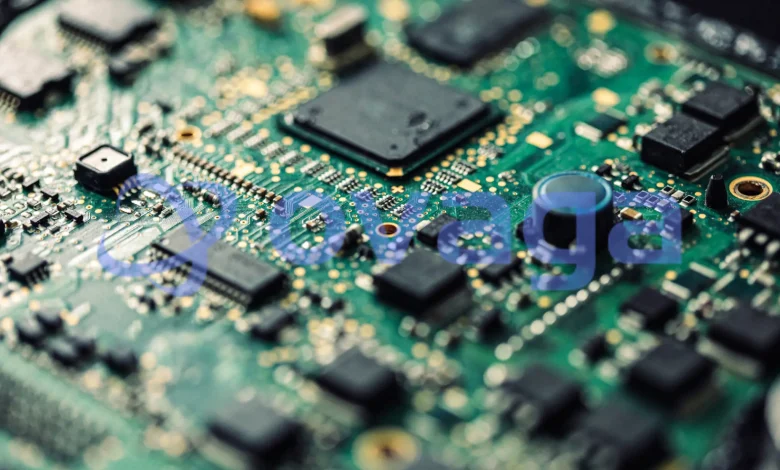
Every leap in consumer electronics, from foldable phones to AI-powered wearables, ultimately traces back to something small enough to sit on a fingertip. Behind every smart speaker, drone, electric toothbrush, and VR headset is a dense ecosystem of resistors, capacitors, diodes, and semiconductors working in concert. As devices shrink and grow smarter simultaneously, the humble electronic component has quietly become the real engine of innovation.
The Miniaturization Race
Consumer demand has always pushed in two directions at once: smaller devices and more powerful ones. Meeting both requires components that pack more functionality into less space while generating less heat and drawing less power. Surface-mount technology (SMT) has been central to this shift, allowing manufacturers to place components directly onto circuit boards without the bulky leads of older through-hole parts. Packages like SOT-23, SOD-123, and QFN have become industry standards precisely because they let designers cram more circuitry into the same footprint.
This is where discrete semiconductors play an outsized role relative to their size. Diodes, for instance, are often overlooked despite being essential for signal protection, rectification, and switching. A component such as the BAV99, a dual switching diode housed in a compact SOT-23 package, illustrates this well. It’s used extensively in signal clamping and voltage-protection circuits in smartphones, laptops, and IoT devices, quietly safeguarding sensitive components from voltage spikes while occupying almost no board space. Parts like this rarely make headlines, but without them, the reliability of modern electronics would suffer dramatically.
Power Efficiency as a Design Priority
Battery life remains one of the biggest differentiators in consumer electronics purchasing decisions. Whether it’s a wireless earbud that needs to last a full workday or an electric vehicle that must deliver hundreds of miles per charge, power efficiency starts at the component level. Modern power management ICs, low-dropout regulators, and efficient MOSFETs allow devices to draw only the current they need, when they need it, minimizing wasted energy.
Passive components have evolved too. Multilayer ceramic capacitors (MLCCs) now offer significantly higher capacitance in smaller packages than they did a decade ago, enabling more compact power delivery networks. Meanwhile, advances in inductor design support the higher switching frequencies required by modern DC-DC converters, which in turn allows for smaller, lighter power supplies inside laptops and chargers.
The Rise of Smart, Connected Devices
The explosion of IoT and smart-home products has placed new demands on component selection. These devices often need to be low-power, low-cost, and capable of wireless communication, all while operating reliably for years without maintenance. This has driven strong demand for specialized RF components, low-power microcontrollers, and sensors capable of detecting motion, temperature, humidity, and light with minimal energy draw.
Connectivity components, in particular, have become a defining feature of next-generation electronics. Bluetooth Low Energy modules, Wi-Fi transceivers, and antenna-matching components must all be tightly integrated to maintain signal integrity in increasingly crowded device housings. As more sensors and radios are packed into smaller enclosures, component quality and electromagnetic compatibility become critical engineering considerations rather than afterthoughts.
Supply Chain Realities Behind Innovation
None of this innovation happens in isolation from the global supply chain. Component sourcing has become a strategic concern for manufacturers of all sizes, particularly after the disruptions of recent years exposed how fragile electronics supply chains can be. Access to a reliable, diverse supplier base for both common and hard-to-find parts has become as important as the design itself.
This is part of why sourcing platforms have grown in importance for engineers and procurement teams alike. Distributors such as China Chip Depot provide access to a broad catalog of semiconductors and passive components, helping designers avoid the bottlenecks that can stall a product launch when a single part becomes scarce. For small and mid-sized electronics companies especially, having dependable access to components like switching diodes, MOSFETs, and passive parts can be the difference between shipping on schedule and missing a critical market window.
What Comes Next
Looking ahead, the next generation of consumer electronics will likely be defined by even tighter integration between hardware and software, with components doing more work in smaller spaces. Wide-bandgap semiconductors like gallium nitride (GaN) are already reshaping charger and power adapter design, offering higher efficiency and smaller form factors than traditional silicon. Meanwhile, sensor fusion is enabling wearables and smart devices to interpret context, not just collect raw data.
None of these advances would be possible without the foundational layer of electronic components that make them physically realizable. As consumer expectations continue to rise, the pressure on component design, sourcing, and reliability will only intensify. The devices of tomorrow may look radically different from what we use today, but they will still depend on the same fundamental building blocks: components engineered to do more, in less space, using less power than ever before.